
Introduction
For much of the internet era, digital technologies were largely viewed through the lens of globalization. Cloud computing platforms served users across continents, social media networks connected billions of people, and digital services increasingly transcended national boundaries. Artificial intelligence initially appeared to follow a similar trajectory. Leading AI models were developed by a relatively small number of organizations, trained on globally sourced data, and deployed across international markets.
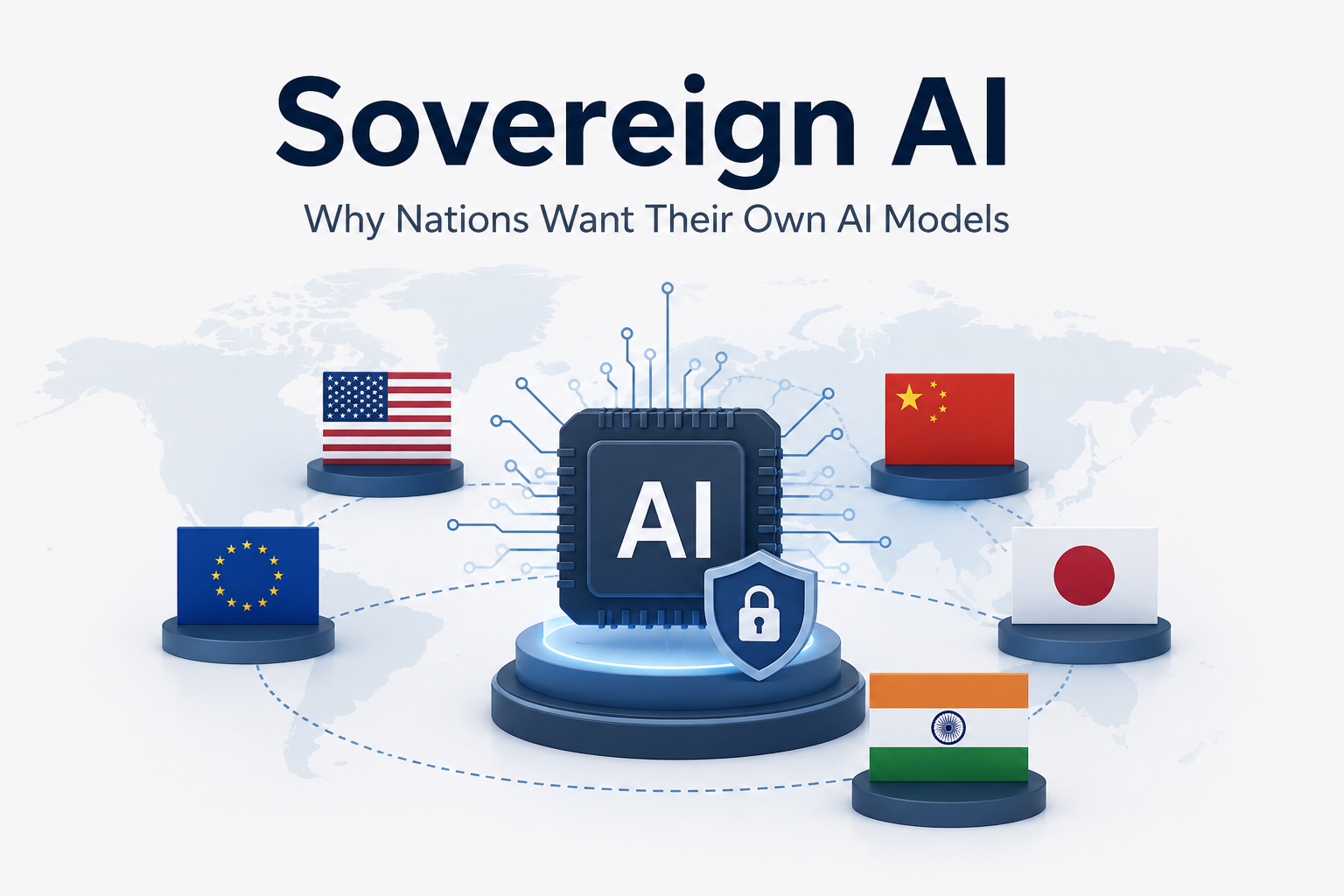
However, as AI has become more powerful and strategically important, governments around the world have begun to reconsider their dependence on external technologies. A growing number of countries now seek to develop what has become known as “sovereign AI”—artificial intelligence systems, infrastructure, datasets, and governance frameworks that align with national priorities and remain under domestic control.
The concept reflects a broader transformation in international affairs. Artificial intelligence is no longer viewed merely as a commercial innovation. Increasingly, it is regarded as a strategic technology comparable to energy infrastructure, telecommunications networks, or advanced defense systems. Governments believe that AI may influence economic competitiveness, national security, public services, scientific research, and cultural representation.
As a result, the global AI landscape is gradually evolving from a highly concentrated ecosystem dominated by a small number of major technology firms toward a more diverse environment in which countries seek greater technological autonomy. This trend raises important questions about innovation, governance, competition, and the future structure of the digital world.
The rise of sovereign AI is therefore not simply a technology story. It is part of a broader debate about power, sovereignty, and strategic independence in the twenty-first century.
Defining Sovereign AI
The term sovereign AI does not have a universally accepted definition, but it generally refers to a country’s ability to develop, deploy, govern, and control critical artificial intelligence capabilities according to its own priorities and interests.Sovereign AI typically involves several components.
The first is computational infrastructure. Advanced AI systems require substantial computing power, data centers, cloud platforms, and semiconductor resources.
The second is access to data. Nations increasingly recognize that data serves as a foundational resource for training and improving AI models.
The third component involves talent. Researchers, engineers, data scientists, and technical specialists play critical roles in developing and maintaining advanced AI systems.
The fourth is governance. Countries seek regulatory frameworks that reflect domestic legal systems, cultural values, and policy priorities.
Together, these elements form the foundation of national AI capabilities.
Why Countries Are Pursuing Sovereign AI
Several factors explain the growing interest in sovereign AI.
One major reason is economic competitiveness. Governments increasingly view AI as a key driver of future growth and productivity. Countries that successfully integrate AI into industries such as manufacturing, healthcare, finance, logistics, and education may gain significant economic advantages.
Another factor is national security. AI technologies have potential applications in intelligence analysis, cybersecurity, defense planning, critical infrastructure management, and emergency response systems. Dependence on external providers may create vulnerabilities in these areas.
Governments are also concerned about technological dependence. If critical AI systems are controlled by foreign organizations, policymakers may have limited influence over their development, deployment, or governance.
Finally, sovereign AI is often linked to cultural and linguistic considerations. Many countries seek AI systems capable of accurately reflecting local languages, histories, legal systems, and social contexts.
These motivations have contributed to a growing global movement toward AI self-reliance.
The Concentration of AI Power
The rise of sovereign AI cannot be understood without considering the concentration of AI development within a relatively small number of countries and organizations.
Training advanced AI models requires vast computational resources, specialized expertise, and significant financial investment. These requirements have contributed to the emergence of a highly concentrated ecosystem dominated by a limited number of major technology firms and research institutions.
While this concentration has accelerated innovation, it has also generated concerns regarding dependency and influence.
Countries that lack access to advanced AI infrastructure may find themselves reliant on external providers for technologies that increasingly affect economic and social systems.
As AI becomes more important, governments are questioning whether such dependencies are sustainable over the long term.
The pursuit of sovereign AI represents one response to this concentration of technological power.
AI and National Security
National security considerations have become one of the strongest drivers of sovereign AI initiatives.
Military organizations increasingly explore AI applications in intelligence gathering, logistics, cybersecurity, surveillance, autonomous systems, and decision support.
Governments worry that reliance on externally controlled AI systems could create vulnerabilities during periods of geopolitical tension or crisis.
Control over AI infrastructure may influence resilience, strategic flexibility, and operational security.
These concerns are similar to those that have historically influenced policies regarding energy security, telecommunications infrastructure, and critical supply chains.
As a result, AI is increasingly incorporated into broader national security strategies.
The Role of Language and Culture
AI systems are often trained on vast quantities of publicly available digital content. However, the distribution of online information is uneven across languages and regions.
Many countries are concerned that globally dominant AI models may not adequately represent local cultures, languages, legal traditions, or historical contexts.
Developing domestic AI capabilities allows governments and organizations to create systems better suited to local needs.
This issue is particularly important for countries with large populations that use languages underrepresented within global digital ecosystems.
The development of culturally relevant AI models is therefore becoming an important aspect of digital sovereignty.
Infrastructure and Computational Independence
Advanced AI systems require enormous computational resources.Training state-of-the-art models often depends on specialized semiconductor technologies, high-performance computing systems, cloud infrastructure, and large-scale data centers.
Countries pursuing sovereign AI increasingly invest in these capabilities.Governments recognize that ownership or access to computational infrastructure influences long-term technological competitiveness.
The growing emphasis on domestic infrastructure reflects broader concerns regarding supply chain resilience and strategic autonomy.
The Economic Dimension
Sovereign AI is closely connected to economic development strategies.
Governments view AI as a general-purpose technology capable of increasing productivity across multiple sectors.
Applications in healthcare, manufacturing, transportation, agriculture, finance, and public administration could contribute significantly to economic growth.
Countries that successfully build AI ecosystems may attract investment, support innovation, create high-skilled jobs, and strengthen competitiveness.
Consequently, sovereign AI initiatives are often integrated into broader industrial and economic modernization programs.
Risks of Fragmentation
While sovereign AI offers potential benefits, it also raises concerns regarding fragmentation.
If countries increasingly develop separate AI ecosystems with distinct standards, regulations, and infrastructure, interoperability may become more difficult.
Businesses operating internationally could face additional compliance burdens. Researchers may encounter barriers to collaboration. Smaller countries may struggle to compete with larger technology powers.
The challenge lies in balancing national autonomy with the benefits of global cooperation and innovation.
Excessive fragmentation could reduce efficiency and limit opportunities for international collaboration.
International Cooperation and Shared Challenges
Despite growing interest in sovereign AI, many AI-related challenges remain global in nature.Issues such as AI safety, cybersecurity, misinformation, technical standards, and ethical governance often require international dialogue.
Countries may compete for technological leadership while still cooperating in areas of shared concern.This pattern mirrors developments in other strategic technologies where rivalry and collaboration coexist.
The future AI landscape is therefore likely to involve both national initiatives and international partnerships
Conclusion
The rise of sovereign AI reflects a broader shift in how governments perceive technology. Artificial intelligence is increasingly viewed not merely as a commercial innovation but as a strategic capability influencing economic development, national security, governance, and cultural representation.
As countries seek greater control over AI infrastructure, data, talent, and governance frameworks, the global AI ecosystem is becoming more diverse and politically significant. The pursuit of sovereign AI illustrates growing concerns regarding technological dependence, strategic autonomy, and digital sovereignty.
Yet the future of AI will not be determined solely by national ambitions. Many of the opportunities and challenges associated with artificial intelligence transcend borders and require international cooperation.
The central question for policymakers is not whether sovereign AI will emerge—it already is. The more important question is how nations will balance technological independence with the need for openness, collaboration, and shared innovation. The answer may shape not only the future of artificial intelligence but also the future structure of the global digital order.