
Context and Background
Kutumb App India represents an emerging category within the country’s digital ecosystem, where online platforms are increasingly structured around communities rather than individual-centric social networking. As internet penetration expands beyond metropolitan regions, user behavior is gradually shifting toward platforms that enable collective participation, shared identity, and interest-based interaction.
Unlike mainstream social media networks that prioritize broad engagement and algorithmic amplification, Kutumb App India operates within a more focused framework. It is designed to facilitate the creation and management of digital communities, often centered around professions, local groups, educational interests, or shared goals. This positioning aligns with a broader global trend where users seek more meaningful and structured interactions rather than open-ended social feeds.
In the Indian context, where community identity—whether based on region, language, or profession—plays a significant role in social organization, platforms like Kutumb App India attempt to translate these offline structures into digital environments.
Kutumb App India: Structural Design and Platform Logic
Kutumb App India is built around the concept of “groups as primary units.” Unlike traditional platforms where user profiles act as the central node, here communities themselves become the focal point. Users join or create groups based on their interests, affiliations, or objectives, and most interactions occur within these defined spaces.
The platform provides administrative tools for group creators, enabling them to manage membership, moderate discussions, and organize content. This structure introduces a level of control that is often absent in open social networks, where content flows are largely dictated by algorithms.
The design logic emphasizes organization over discovery. Instead of scrolling through a continuous feed of mixed content, users engage within specific communities, making interactions more targeted and contextually relevant. This can enhance the quality of discussions, as participants typically share a common purpose or interest.
However, this structure also limits spontaneous content discovery. Users are less likely to encounter diverse perspectives outside their chosen communities, which may lead to informational silos.
Community Formation and Interaction Dynamics
The defining feature of Kutumb App India lies in its ability to facilitate structured community formation. Groups on the platform can range from small local clusters to large networks centered around professional or educational themes.
Interactions within these communities are typically more focused than those on open social platforms. Discussions often revolve around specific topics such as job opportunities, exam preparation, local issues, or shared interests. This creates an environment where content is not only consumed but also actively exchanged.
Kutumb App India demonstrates how digital platforms can replicate and, in some cases, enhance traditional community structures. For example, professional groups can function as informal networks for knowledge sharing, while local groups can serve as channels for community coordination.
At the same time, the effectiveness of these communities depends heavily on moderation and participation quality. Active and well-managed groups tend to generate meaningful engagement, whereas poorly moderated spaces may become inactive or cluttered.
Interface, Accessibility, and User Experience
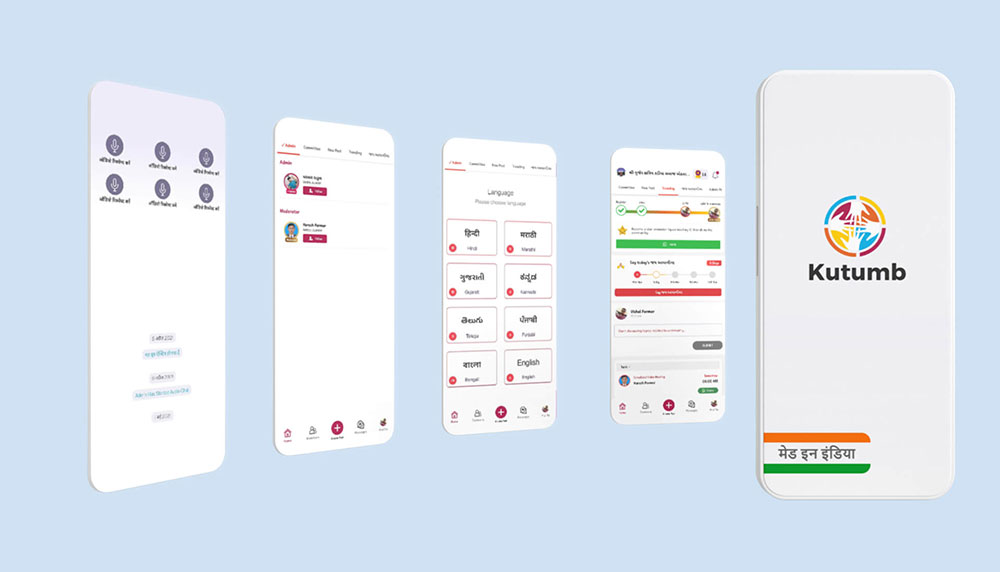
The interface of Kutumb App India is designed to support community-centric navigation. Users can easily switch between groups, access discussions, and participate in conversations. The layout prioritizes clarity, ensuring that even users with limited digital experience can engage with the platform.
Language localization is an important feature, allowing users to interact in regional languages. This enhances accessibility and encourages participation from users who may not be comfortable with English-dominated platforms.
The platform is also optimized for mobile usage, which is critical in a market where smartphones are the primary mode of internet access. Performance remains stable across varying network conditions, contributing to a consistent user experience.
However, compared to more mature platforms, Kutumb App India offers limited personalization features. Content recommendations are primarily driven by group membership rather than adaptive algorithms. While this maintains relevance, it may reduce exposure to new or diverse content.
Role in Professional and Social Networking
Kutumb App India occupies a unique position between social networking and professional networking platforms. While it does not function as a formal job marketplace, many communities are oriented toward career development, skill sharing, and employment opportunities.
This hybrid positioning allows the platform to cater to users seeking both social interaction and practical value. For instance, students preparing for competitive exams may join groups focused on study resources, while professionals may engage in discussions related to industry trends.
The platform’s community-driven structure can also support peer-to-peer learning. Knowledge exchange within groups often occurs in an informal manner, making it accessible and relatable.
At the same time, the absence of standardized verification mechanisms means that the accuracy of shared information may vary. Users often rely on collective validation within the community rather than formal sources.
Economic Model and Platform Sustainability
Kutumb App India’s monetization approach is less overt compared to advertising-heavy platforms. While the platform may incorporate promotional content or partnerships, its primary focus appears to be on user growth and community expansion.
In the long term, community-based platforms often explore revenue models such as premium features, targeted services, or partnerships with organizations. The success of such models depends on the platform’s ability to maintain active and engaged communities.
One potential advantage of Kutumb App India is its ability to create niche user segments. Communities built around specific interests or professions can attract targeted services, making monetization more precise and potentially more effective.
However, balancing monetization with user experience will be critical. Excessive commercialization could disrupt the organic nature of community interactions.
Governance, Trust, and Moderation
As a community-driven platform, Kutumb App India relies heavily on group administrators for moderation. This decentralized approach allows communities to establish their own norms and guidelines, but it also introduces variability in governance standards.
Well-managed groups can maintain high-quality discussions and foster constructive engagement. In contrast, poorly moderated communities may face issues such as misinformation, spam, or irrelevant content.
The platform’s role in overseeing these dynamics is crucial. While decentralized moderation provides flexibility, there is a need for overarching policies to ensure consistency and protect user interests.
Trust within the platform is often built through repeated interactions within communities. Users tend to rely on familiar contributors and group dynamics rather than institutional verification mechanisms.
Strengths and Positive Attributes
Kutumb App India’s primary strength lies in its community-first approach, which enables structured and meaningful interactions. The platform supports interest-based networking, making it relevant for users seeking focused engagement rather than broad social exposure. Its emphasis on regional languages enhances accessibility and inclusivity. The ability to create and manage communities provides users with a sense of ownership and control, which can strengthen engagement and retention.
Additionally, the platform’s hybrid positioning between social and professional networking expands its utility. It can serve as a space for knowledge sharing, collaboration, and informal learning.
Constraints and Areas of Concern
The platform’s reliance on community-driven moderation introduces inconsistency in content quality and governance. The absence of strong discovery mechanisms may limit exposure to new communities and ideas. Verification of information remains a challenge, particularly in groups focused on professional or educational topics.
User experience, while functional, lacks the depth and refinement seen in more established platforms. Limited personalization features may affect long-term engagement. Furthermore, the platform’s monetization strategy is still evolving, and its sustainability will depend on balancing growth with user trust.
Closing Observations
Kutumb App India reflects a broader shift toward community-centric digital platforms, where interaction is structured around shared interests rather than open-ended social feeds. This model aligns with changing user expectations, particularly in environments where relevance and purpose are prioritized over scale.
The platform’s future will depend on its ability to strengthen governance frameworks, enhance user experience, and maintain the authenticity of its communities. As digital ecosystems continue to evolve, Kutumb App India offers insight into how online platforms can replicate and transform traditional community structures in a connected world.