Context and Background
Public App India has emerged as a notable example of how hyperlocal digital platforms are reshaping information access across regional and semi-urban environments. Over the past decade, India’s digital ecosystem has expanded rapidly, driven by affordable smartphones and low-cost data. While early adoption was largely concentrated in metropolitan areas, a significant portion of new users now comes from tier-2 and tier-3 cities, where content preferences differ considerably from urban audiences.
In these regions, users often prioritize information that directly affects their immediate surroundings rather than national or global narratives. This shift has created space for platforms like Public App India, which focus on delivering geographically relevant updates. Instead of competing with large-scale social networks or national news platforms, it operates within a more localized informational framework, where proximity becomes a defining factor in content relevance.
This transition toward hyperlocal content is not merely a technological change but reflects a deeper transformation in how digital media is consumed and valued across diverse user groups.
Public App India: Structural Design and Platform Logic
Public App India operates on a location-centric architecture that defines both its strengths and limitations. During onboarding, users are required to select their geographic region, typically at the district level. This selection becomes the primary filter through which content is delivered, ensuring that users are exposed to information that is directly relevant to their locality.
Unlike algorithm-driven platforms that prioritize engagement metrics such as clicks, shares, or watch time, Public App India relies heavily on geographic relevance. This approach reduces algorithmic complexity while increasing contextual accuracy. Users are less likely to encounter unrelated or globally trending content and more likely to see updates that impact their daily lives.
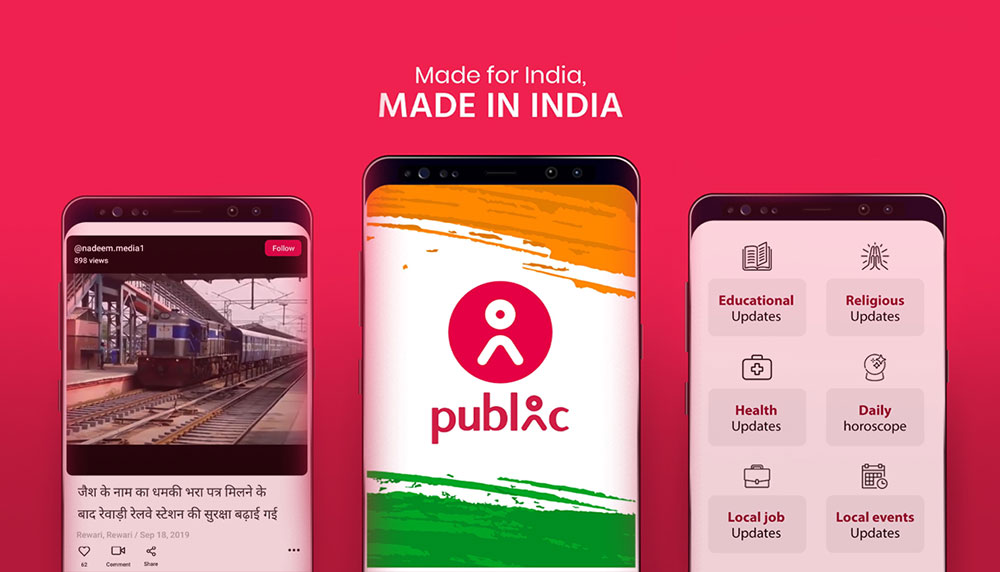
The platform primarily uses short-form video as its dominant content format. This decision aligns with broader consumption trends in mobile-first markets, where video content is often more accessible than text. It also lowers the barrier to content creation, allowing individuals without formal writing skills to participate in information sharing.
However, this design also influences the nature of content itself. Information tends to be immediate, event-driven, and minimally edited. While this enhances speed and accessibility, it also reduces the level of narrative depth and editorial refinement typically associated with traditional media formats.
Content Flows and Information Dynamics on Public App India
The content ecosystem of Public App India is built around decentralized participation. Users are not only consumers but also contributors, uploading videos that document events, issues, or announcements within their local communities. This participatory model enables a form of grassroots-level information exchange that is rarely seen in centralized media systems.
Public App India demonstrates how digital platforms can enable localized storytelling at scale. Events that might otherwise remain undocumented, such as minor civic issues, local disputes, or community gatherings, gain visibility through user-generated content. This can contribute to increased awareness and, in some cases, local accountability.
At the same time, the absence of standardized editorial processes introduces variability in content quality. Contributors may lack formal training in verification or reporting standards, which can affect accuracy and context. As a result, the information environment on Public App India exists within a spectrum where authenticity and immediacy coexist with potential inconsistencies.
Distribution mechanisms further reinforce localization. Content is typically confined to specific geographic clusters, meaning that users primarily engage with information from their own region. While this ensures relevance, it also limits cross-regional information flow, creating a fragmented but highly contextualized media landscape.
Interface, Accessibility, and User Interaction
The user experience of Public App India is designed with accessibility as a primary objective. The interface is simple and intuitive, allowing users with varying levels of digital literacy to navigate the platform بسهولة. A vertically scrolling feed structure aligns with common mobile usage habits, reducing the learning curve for new users.
Language localization is a critical component of the platform’s accessibility strategy. Public App India supports multiple regional languages, enabling users to consume content in their preferred linguistic context. This feature significantly enhances inclusivity, particularly in regions where language barriers can limit digital participation.
Performance optimization for low-bandwidth environments further strengthens usability. The platform is designed to function efficiently even in areas with inconsistent network connectivity, ensuring that users can access content without significant delays.
However, the simplicity of the interface also introduces certain limitations. Advanced features such as topic-based categorization, content filtering, and adaptive personalization are relatively limited. For users accustomed to more sophisticated digital platforms, this may restrict deeper exploration and long-term engagement.
Localized Creator Networks and Influence Structures
Public App India has facilitated the emergence of localized creator networks, where individuals gain recognition within specific geographic regions. Unlike global social media platforms that emphasize scale and virality, influence on Public App India is often confined to community-level visibility.
This localized influence can have meaningful social implications. Contributors may highlight civic issues, document governance challenges, or bring attention to events that require public awareness. In this sense, Public App India functions as a tool for decentralized information sharing and community engagement.
At the same time, the lack of formal training and standardized guidelines among contributors introduces challenges. Ethical considerations such as privacy, consent, and responsible reporting may not always be consistently addressed. Strengthening these aspects will be important for maintaining credibility as the platform continues to grow.
Economic Framework and Revenue Orientation
The monetization model of Public App India is closely aligned with its hyperlocal focus. Advertising is typically targeted at specific geographic regions, allowing businesses to reach audiences within defined areas. This creates opportunities for small and medium enterprises that may not have access to larger digital advertising ecosystems.
Public App India also provides a platform for political campaigns and local service providers to engage with region-specific audiences. This localized targeting increases the relevance of advertisements and can lead to higher engagement rates compared to generic campaigns.
However, this approach also raises questions about transparency. The integration of promotional content within an information-driven environment can blur the distinction between news and advertising. Clear labeling and disclosure mechanisms are essential to maintain user trust.
Governance, Trust, and Content Integrity
As a user-generated content platform, Public App India faces ongoing challenges related to governance and content integrity. While moderation systems are in place, their scope and visibility are not always clear to users. This can create uncertainty about how content is evaluated and regulated.
Misinformation remains a potential concern, particularly in fast-moving situations where content is uploaded in real time. Without clearly visible verification layers, users may find it difficult to assess the credibility of certain reports. This issue reflects broader challenges across digital media platforms globally.
Privacy considerations are equally important. Content often involves real-world individuals and events, raising questions about consent and ethical representation. Addressing these concerns requires a combination of platform-level policies and user awareness.
Strengths and Positive Attributes
Public App India demonstrates a strong alignment with localized information needs, making it particularly relevant in regions that are underserved by mainstream media. Its emphasis on regional languages enhances accessibility and inclusivity, enabling broader participation across diverse user groups. The participatory content model encourages grassroots-level reporting and increases the visibility of local issues. Additionally, its localized advertising framework supports small businesses and contributes to the development of regional digital economies.
Constraints and Areas of Concern
The decentralized nature of Public App India’s content model introduces variability in quality and raises concerns about verification. The absence of consistently visible editorial oversight can affect perceived credibility, especially in sensitive contexts. While the platform is accessible, it lacks advanced features that could enhance content discovery and user engagement. Moderation systems, though present, are not always transparent, which may impact trust. Furthermore, the integration of advertising within content streams requires clearer differentiation to avoid ambiguity.
Closing Observations
Public App India illustrates a broader transition toward localized and community-driven information systems in the digital era. By prioritizing geographic relevance, it challenges traditional models of content distribution and highlights the importance of proximity in shaping user engagement.
As Public App India continues to evolve, its long-term role will depend on its ability to balance accessibility with reliability. Strengthening trust mechanisms, improving content governance, and enhancing user experience will be critical in determining whether it can sustain credibility while maintaining its core value proposition.